GCSE AQA Paper 1 Advice Tips
How to answer question 3: The Structure Question
How has the writer structured the text to interest the reader?


The question is asking you to:
- Explain the effect of the writer’s structural choices
- Identify structural features and devices
- Identify word classes
- Evidence your ideas
- Explain your quotation
Key tips:
- The question always the main bullet points to guide you.
Use these to structure your answer:
What the writer focuses the reader’s attention on at the beginning.
How the writer shifts the focus.
Any other structural features.
- It is important to explain the effect of the structural choices rather than merely explaining what the quote implies.
YOUR GOAL
Aim to end every paragraph with a sentence that is about the writer and structure such as:
‘The author intentionally chose to ______ (mirror/foreshadow/shift the focus/ change perspective/ repeat a motif) to convey …’
To effectively revise for the question 3 you will need to be informed, prepared and confident. You will need to fully explain their usage and effect within the text.
- You need to be skilled in identifying and explaining the effects of structural features.
Challenge yourself to remember some of the features in the grid below.
Research some more structural features and add them to this grid.
| Mirroring | Repetition | Polysyndeton | |
| Flashback | Perspective Shift | Linear Structure | |
Try Out the Skill
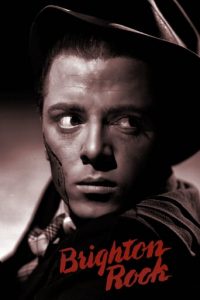
Select a page from a novel and use the same question. Test and apply your knowledge by planning and writing a full answer. The openings of chapters are often good places to look because the writer often shifts the focus. Try writing your answer to this question on the opening chapter of Graham Greene’s novel Brighton Rock.
How has the writer structured the text to interest you as a reader?
- What the writer focuses your attention on at the beginning of the source
- How and why the writer changes this focus as the source develops
- Any other structural features that interest you
(8 marks)
Below the text is a sample answer is provided by Serena our lead English tutor at Swift Tutors
HALE knew, before he had been in Brighton three hours, that they meant to murder him. With his inky fingers and his bitten nails, his manner cynical and nervous, anybody could tell he didn’t belong – belong to the early summer sun, the cool Whitsun wind off the sea, the holiday crowd. They came in by train from Victoria every five minutes, rocked down Queen’s Road standing on the tops of the little local trams, stepped off in bewildered multitudes into fresh and glittering air: the new silver paint sparkled on the piers, the cream houses ran away into the west like a pale Victorian water-colour; a race in miniature motors, a band playing, flower gardens in bloom below the front, an aeroplane advertising something for the health in pale vanishing clouds across the sky. It had seemed quite easy to Hale to be lost in Brighton. Fifty thousand people besides himself were down for the day, and for quite a while he gave himself up to the good day, drinking gins and tonics wherever his programme allowed. For he had to stick closely to a programme: from ten till eleven Queen’s Road and Castle Square, from eleven till twelve the Aquarium and Palace Pier, twelve till one the front between the Old Ship and West Pier, back for lunch between one and two in any restaurant he chose round the Castle Square, and after that he had to make his way all down the parade to West Pier and then to the station by the Hove streets. Advertised on every Messenger poster: “Kolley Kibber in Brighton today”. In his pocket he had a packet of cards to distribute in hidden places along his route: those who found them would receive ten shillings from the Messenger, but the big prize was reserved for who-ever challenged Hale in the proper form of words and with a copy of the Messenger in his hand: “You are Mr. Kolley Kibber. I claim the Daily Messenger prize.” This was Hale’s job to keep doing his duty until a challenger released him, in every seaside town in turn: yesterday Southend, today Brighton, tomorrow – He drank his gin and tonic hastily as a clock struck eleven, and moved out of Castle Square. Kolley Kibber always played fair, always wore the same kind of hat as in the photograph the Messenger printed, was always on time. Yesterday in Southend he had been unchallenged: the paper liked to save its guineas, occasionally but not too often. It was his duty today to be spotted and it was his inclination too. There were reasons why he didn’t feel too safe in Brighton, even in a Whitsun crowd. He leant against the rail near the Palace Pier and showed his face to the crowd as it uncoiled endlessly past him, like a twisted piece of wire, two by two, each with an air of sober and determined gaiety. They had stood all the way from Victoria in crowded carriages, they would have to wait in queues for lunch, at midnight half asleep they would rock back in trains an hour late to the cramped streets and the closed pubs and the weary walk home. With immense labour and immense patience they extricated from the long day the grain of pleasure: this sun, this music, the rattle of the miniature cars, the ghost train diving between the grinning skeletons under the Aquarium promenade, the sticks of Brighton rock, the paper sailors caps. Nobody paid any attention to Hale; no one seemed to be carrying a Messenger. He deposited one of his cards carefully on the top of a little basket and moved on, with his bitten nails and his inky fingers, alone.
|
Sample Answer Greene’s rushed, urgent structural style and structure thrills the reader as it reflects the murder mystery genre of the opening line, ‘they meant to murder him’. Greene lures us in with his craft as we wait awkwardly on the edge of our seat – acutely feeling Hale’s strained, almost painful panic and uneasiness. There are frequent perspective shifts throughout as we progress from Hale and his schedule to descriptions of the holiday crowd and fleeting images of Brighton from the tram. Greene also effectively incorporates the technique of juxtaposition. He juxtaposes the casual ‘holiday crowd’ incongruously with the solitary misfit character of Hale to sharpen the contrast between the two and thereby heighten the suspense and tension. Additionally, he uses a complex sentence to depict Hale’s tightly structured schedule which intensifies his strict adherence to ‘his programme’ . Added to this are the frequent time references ‘from twelve till one’ which demonstrate a chronological, linear time structure. The use of a chronological structure, combined with hourly portioned out time references, successfully mirrors Hale’s daily schedule by reinforcing the gravity and sheer importance of this rigid ‘programme’ which makes the reader curious. Greene’s tight, tense structural style keeps the reader’s interest focused as we feel we are followers in pursuit of Hale, reminiscent of a pursuit which reflects the crime genre. The structure cleverly mirrors Hale’s constantly changing movements and stopping points as he moves around Brighton. There is also frequent use of asyndetic listing which creates a fleeting, fluid impression of the passing sights of Brighton’s tourist attractions. This resembles a cinematic technique as if we are tracking Hale and the town of Brighton itself. Hale has become the epitome of panic as his nerves fray with mounting tension. Greene’s taut, breathless, rushed structure paints a picture of a man teetering on the edge of normality. The concluding lines mirror the opening as we are still left with an image of an anxious, solitary Hale with his ‘inky nails’ and ‘bitten fingers’. This cyclical structure has taken us full circle.
|